

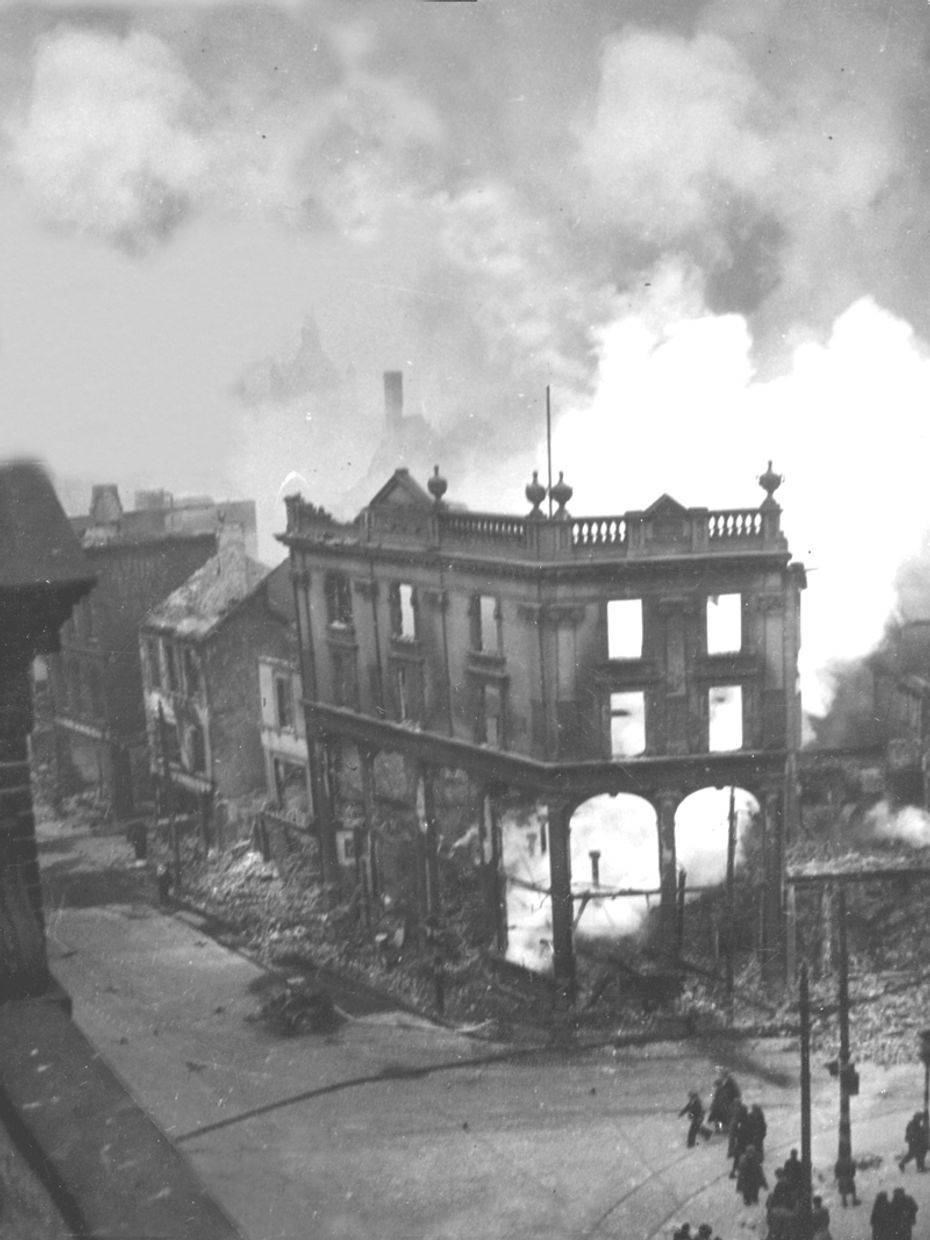

The decision to target Belfast in 1941 during the tumultuous days of World War II was not arbitrary; rather, it was driven by a combination of strategic military considerations and the city’s significant industrial capabilities.
Belfast held immense strategic importance in the military campaign against Hitler’s forces. Its bustling shipyards, particularly Harland and Wolff, were at the forefront of naval construction, churning out vital vessels for the Royal Navy. From aircraft carriers like HMS Belfast to cruisers and countless naval vessels, Belfast’s shipyards played a pivotal role in Britain’s maritime defence.
Moreover, Short Brothers, a prominent aircraft manufacturer in the city, contributed to the war effort with the production of Stirling bombers and Sunderland flying boats. The industrial output of Belfast extended beyond shipbuilding and aircraft manufacturing, encompassing the production of tanks, ammunition, aircraft parts, and more.
Despite its strategic importance, Belfast was shockingly underprepared and poorly defended against potential aerial attacks. A Luftwaffe reconnaissance flight over Belfast in November 1940 revealed glaring weaknesses in the city’s defences, with only seven anti-aircraft batteries in place. This deficiency made Belfast one of the most vulnerable cities in the United Kingdom, presenting an enticing target for enemy bombers.
Identified Targets
The reconnaissance mission provided the German forces with invaluable intelligence, highlighting key targets within Belfast that were deemed ripe for attack. These included the iconic Harland and Wolff shipyards, the Short and Harland aircraft factory, vital infrastructure such as power stations and waterworks, as well as military installations like Victoria Barracks.
To delve deeper into the events surrounding the Belfast Blitz and explore the city’s wartime history, consider embarking on a tour with Dr. Tom’s Tours. Experience firsthand the stories of resilience, survival, and the enduring spirit of the people of Belfast amidst the chaos of war.