

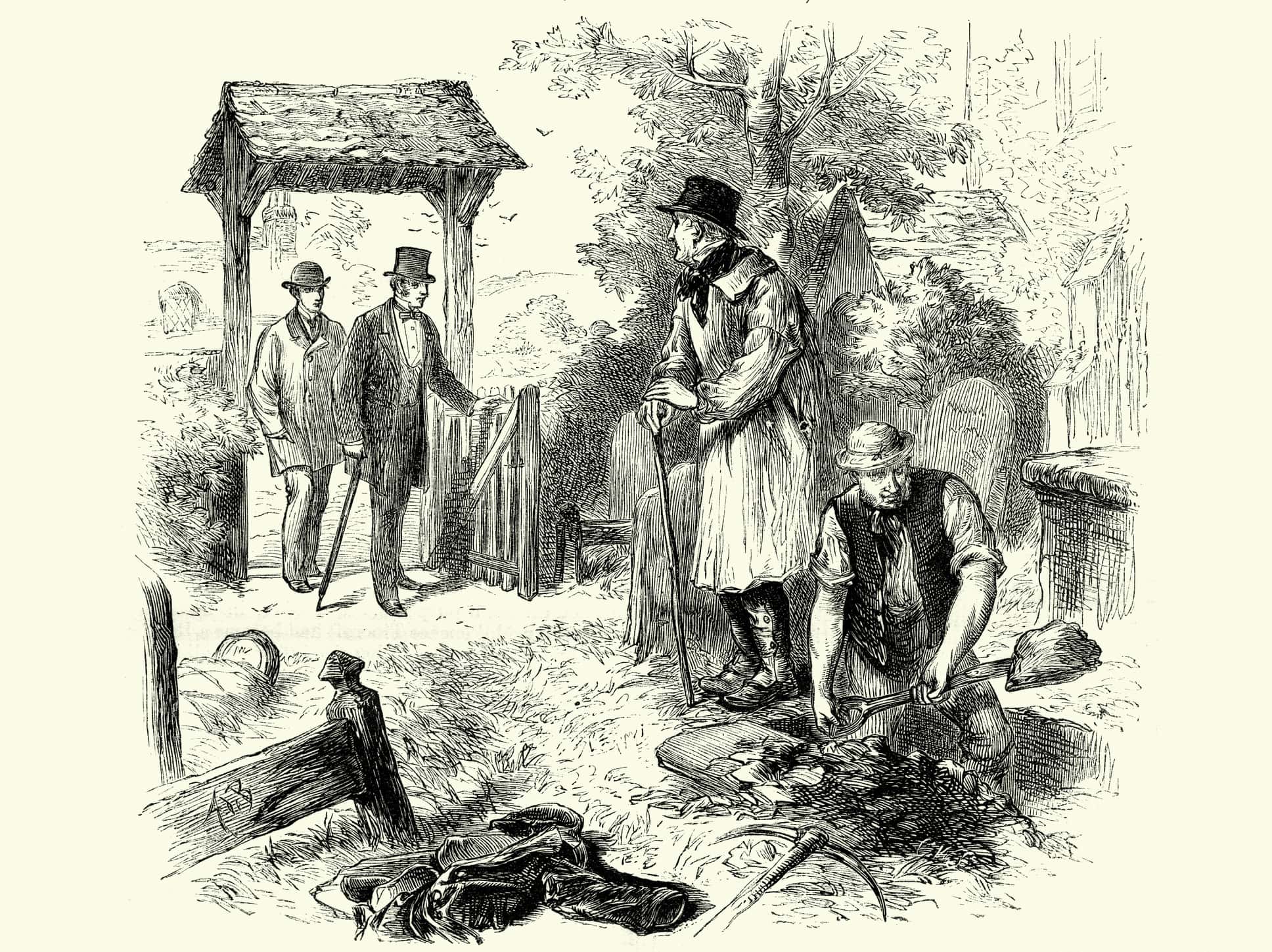

THE WATCH HOUSE
Within Shankill Graveyard, the silent sentinel of the Watch House stands as a somber reminder of a grim chapter in medical history. These structures were erected in response to the nefarious activities of “Resurrection Men” — individuals who plundered freshly interred bodies to supply anatomy schools with cadavers for dissection. Under the cover of darkness, brave souls stood guard, hoping to thwart the ghoulish practices of grave robbers and protect the sanctity of the deceased.
Before the enactment of the Anatomy Act of 1832, the primary legal source of cadavers was the bodies of convicted criminals. However, this changed with the introduction of the law, allowing for the dissection of unclaimed or donated bodies, thereby providing a legal avenue for anatomical study.
BURKE AND HARE
The chilling saga of Burke and Hare adds a gruesome twist to the narrative. Sensing the demand for fresh corpses and the escalating difficulties of grave robbing, Ulstermen William Burke and William Hare took matters into their own hands. Over a span of 10 months in 1828, they callously murdered 16 individuals, selling their remains to anatomist Dr. Robert Knox.
Their crimes eventually came to light, leading to their arrest and trial for the capital offence of murder. In a bid for leniency, Hare turned state’s evidence against Burke, resulting in Burke’s conviction and subsequent hanging in January 1829. In a macabre twist of fate, Burke’s body was handed over to Edinburgh University’s anatomy department for public dissection, and his skeleton remains on display at the Anatomy Museum in Edinburgh.
The tale of grave robbers and murderers serves as a chilling reminder of the lengths to which some would go in pursuit of profit, leaving an indelible mark on the history of medicine and the ethical considerations surrounding anatomical study.
For further insights into this dark chapter of medical history, visit Dr. Tom’s Tours.