

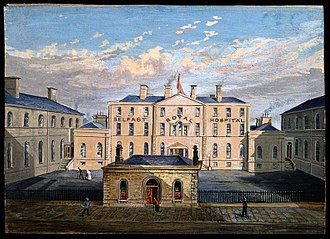

In 1851, Dr. A.G. Malcolm penned a compelling narrative in his book “History of the General Hospital,” illuminating the remarkable growth of medical care in Belfast. From its humble beginnings emerged a network of dedicated individuals whose determination and tenacity propelled the city’s healthcare infrastructure forward.
In the early days, the infirmary at the Poor House stood as the sole beacon of medical relief in Belfast until the opening of The Dispensary in 1792. Among the visionaries behind this milestone were esteemed figures such as Valentine Jones, Waddell Cunningham, and Robert Holmes, all integral members of the Belfast Charitable Society.
Although The Dispensary temporarily closed its doors around 1795/6, a resurgence was sparked in 1798, spearheaded by the efforts of Henry Joy, Robert Holmes, and William Clarke. Their collaborative spirit paved the way for a new Dispensary and Fever Hospital on Factory Row, marking a pivotal moment in Belfast’s healthcare landscape.
The scarcity of medical practitioners in 1806, with only nineteen physicians and surgeons serving the town, underscored the pressing need for philanthropic intervention. Generous donations of time and expertise from these practitioners catalyzed the establishment of philanthropic medical facilities, providing essential care for the sick and impoverished.
The Belfast Charitable Society emerged as a cornerstone of compassionate healthcare, with many doctors offering their services free of charge to the Poor House and Infirmary. The Purdon family’s enduring legacy, spanning eight generations of medical service from 1804 to 1947, stands as a testament to their unwavering dedication.
Subsequent developments, such as the establishment of the Lying-In Hospital, further enriched Belfast’s healthcare landscape. Influential figures like Lady Harriet Skeffington played pivotal roles in both the Poor House and the new facility, underscoring the interconnectedness of philanthropic endeavors in advancing medical care.
As history unfolds, it becomes evident that small groups of philanthropic families and physicians served as catalysts for change in Belfast. Their tireless efforts, documented in the annals of charitable institutions, form a captivating narrative of resilience and compassion, shaping the city’s healthcare legacy for generations to come.
For a deeper exploration of Belfast’s medical heritage, visit Dr. Tom’s Tours.