
Christ Church, College Square North
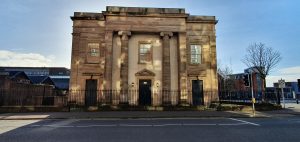
The Church was built in 1833 to accommodate 1,650 people. It has been cited as ‘a fine example of late Georgian Classicism’.[1] Do you want to learn more about the history of Belfast? Let me take you on my Bricks…

The Church was built in 1833 to accommodate 1,650 people. It has been cited as ‘a fine example of late Georgian Classicism’.[1] Do you want to learn more about the history of Belfast? Let me take you on my Bricks…
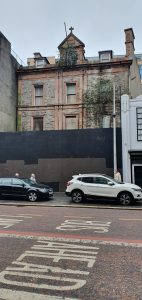
The hospital opened in the 1870s. It was founded by charitable subscription and some of the prominent patrons included Lord O’Neill (President), Sir Thomas Dixon (Patron) and Lady Edith Dixon (Patron). From 1897, due to funding problems, the hospital was…
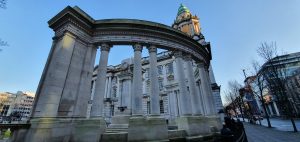
The Belfast Cenotaph was designed by Sir Alfred Brumwell Thomas and unveiled in 1929. It is a monument to all those killed from Belfast in the First and Second World War. The memorial includes a central Portland stone monument about…
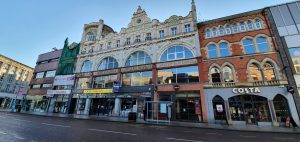
Castle Buildings were purpose built for silk mercers and milliners C. McCullagh and Co in 1904-05.[1] Built by Blackwood and Jury, they are Belfast’s finest example of Art Noveau.[2] The buildings feature a façade of ‘carraraware’ faience tiles, an irregular…
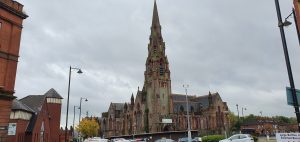
Designed in the Gothic Revival style by architect W. H. Lynn, it was completed in 1875. The Church is named after the builder James Carlisle’s son to whom he built the church. The church was home to one of the…
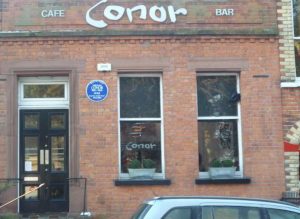
Conor’s former studio is located in Stranmillis, south Belfast. Conor was born on 9th May 1881 at 5 Fortingale Street, Belfast, to William and Mary Connor. Williams talent was first noticed at the age of ten when his chalk drawings…
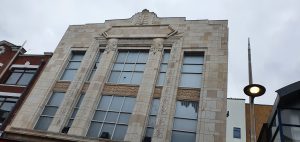
This building is the former Belfast store for the clothing store Burtons. Built in the Art Deco style by Harry Wilson of Leeds, it was constructed in 1931-33.[1] The three-storey building has a remarkable decorative faïence façade which includes stylised…
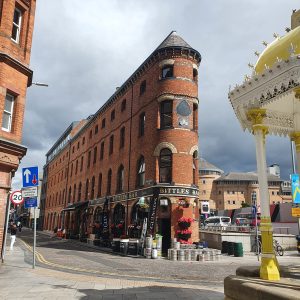
Bittles Bar is bar located near Victoria Square in central Belfast, Northern Ireland. It is one of Belfast’s more curious pubs being “flat-iron” in shape (see Flatir Building in New York). It was built in 1868 and was originally called…
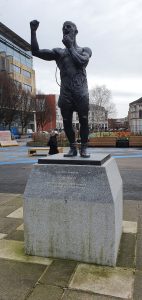
Born in Lancaster Street in North Belfast in 1918, Monaghan attended St Patrick’s Christian Brothers’ School in Donegall St. After a short absence for wartime service, Monaghan resumed his career as a boxer and in 1947, gained the National Boxing…
I’m delighted to announce that I have a new tour of Belfast; ANTI SLAVERY BELFAST, it tells the story of the city’s role in the slave trade, and in its abolition. In the 18th century, Belfast merchants exported linen clothing,…