Belfast Waterfront

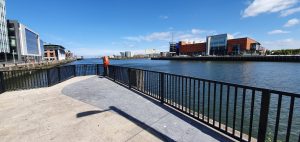
The Belfast Waterfront borders the river Lagan and consists of the area north and south of the modern Lagan Weir on the County Down side. Known as Donegall Quay, this areas was dominated by docks as Belfast was a global…

The Belfast Waterfront borders the river Lagan and consists of the area north and south of the modern Lagan Weir on the County Down side. Known as Donegall Quay, this areas was dominated by docks as Belfast was a global…
I will be leading walking Blitz walking tours in central Belfast throughout 2022. ABOUT THIS EVENT During the Easter and Spring of 1941, the German air force launched a series of devastating raids against Belfast, causing widespread damage, death and…
The raid on the night of the 4-5 May had caused significant damage. Though this was known as the ‘fire raid’ because the Germans used three times the number of incendiaries than they had done on the Easter Tuesday Raid.…
On Sunday 4–5 May 1941, three weeks after the Easter Tuesday raid, Belfast suffered its third bombing raid. The area affected is show in the graphic below. Around 1 am, Luftwaffe bombers flew over the city, concentrating their attack on the Harbour Estate…
Crime continued in Blitz Belfast. The papers reported various punishments given by the courts. Mr J.H. Campbell K.C. R.M. sentenced a number of offenders. John Maquire, an 18 year old youth, was fined 40 shillings for saying ‘Up Hitler’ in…
The ‘trekkers’ and ‘ditchers’ were Belfast residents who slept in the countryside around Belfast and walked or commuted into the city during the day for work. People feared another attack and thought they were safer sleeping outside the city than…
In the aftermath of the 15/6 April raid, statutory, charitable and welfare organisations were busy trying to rehouse, provide and care for those injured and/or made homeless as a result of the attack. Moya Woodside (above) was a home visitor…
An article in the Belfast Telegraph (1.4.1941) advised people to ‘make friends with the people next door’. In the event of bomb damage to properties ‘rescue squads will be greatly facilitated in their work and will know exactly where to…
In the Belfast Telegraph, a naval officer who had been posted to Belfast for a year gave an anonymous ‘unsolicited testimonial’ about his experience in the city. The article provides an interesting view of life in the city and how…
By the 29 April 1941, the Northern Ireland government at Stormont estimated that 100k people had left the city.[1] They had either fled to new homes outside the city boundaries or were ‘ditchers’ and ‘trekkers’, people who slept in the…